
Junko Yamamoto Performer
現代の日本伝統楽器・聖音シャオと電子音響を融合させる、クリチバ発の前衛パフォーマンスチャンネル。海外招聘や美術イベントにも関わる独自の音響美学と、教育・文...
クリチバ在住
Junko Yamamoto is Artist, Performer, Shō-Player, Pianist and Essayist. She received the Grand Prix of the Experimental Sound, Art & Performance Festival Tokyo, the Phoenix Evolution Award Osaka, the best performer prize for spanish contemporary music at the „X. Montsalvatge Competition“ and among others. She has been invited to many festivals, such as “Le festival musica" in France, “Bartok Festival” in Hungary, "Musicarama" in Hong Kong, “Takefu Int. Music Festival” in Japan, „Bienal Música Hoje Curitiba“ in Brazil, „Festival New Music Week“ in South Africa, „Meridian Festival" in Rumania, „Dark Music Days“ in Iceland, "overdrive festival" in New York, „Delian Academy“ in Greece, „Sinuston Festival“ and „Digital Kunst Festival“ in Germany. #piano #fluxus #japanesemusic #笙 #contemporarymusic #Dark Music Days #japaneseculture #ドイツ #ドイツ在住 #パフォーマンスアート #フルクサス#現代音楽 #クラシックピアノ
195
登録者数
23
動画数
 登録者数・動画数などのデータは YouTube から取得しています。当サイトが独自に作成した解説・コメントは YouTube が提供する情報ではありません。


チャンネル紹介
現代の日本伝統楽器・聖音シャオと電子音響を融合させる、クリチバ発の前衛パフォーマンスチャンネル。海外招聘や美術イベントにも関わる独自の音響美学と、教育・文化・Vlogの視点で世界へ発信します。
編集部のおすすめポイント
独自の音響美学と教育的視点を両立させる、クリチバ発の前衛音楽チャンネル。動画タイトルと再生数から3つの強みを浮き彫りにする。1) 現代日本伝統楽器・聖音シャオと電子音響の融合を軸にした独自性(Georg Friedrich Haas: "Ein Schattenspiel" のピアノとライブエレクトロニクス、2097回再生) 2) 海外招聘や美術イベントへの発信力、Vlog要素を活用した透明な制作過程(Junko Poppy Yamamoto Live streaming concert 2020、781回再生) 3) 学術・教育的価値の高さと、文化的背景の解説を伴う教育系コンテンツの継続性(Trailer "Rhino 15.999" や Tokyo Fluxus など最新動画群の存在)
こんな人におすすめ
編集部の見どころピックアップ
チャンネル情報
人気の動画
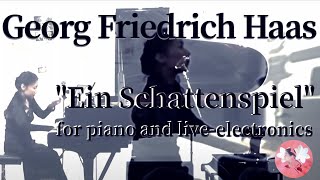
Georg Friedrich Haas: "Ein Schattenspiel" for piano and live-electronics
"Ein Schattenspiel" for piano and live-electronics (2004) Composer: Georg Friedrich Haas (1953) Performer: contemporary piano currents Piano: Junko Yamamoto Live-Electronics, Sound-Direction, Video: Oliver Sascha Frick Live recording: 19th October 2019 - Werkeinführung - Schatten sind nicht ausschließlich stille und nicht ausschließlich analoge Begleiter. Georg Friedrich Haas greift aus der Vielzahl möglicher ästhetischer Spielarten mit dem Projektionsbild eine Variante auf, in der ein Pianist seinen eigenen Schatten vorauswirft. Die elektronischen Mittel: Das Gespielte wird live aufgezeichnet und mit einer Verzögerung von anfangs 24 Sekunden zum Klavier um einen Viertelton höher transponiert wiedergegeben. In der Sukzession des Werkes wird das Tempo der Echowiedergabe um den Faktor 32/33 gesteigert, der Klavierklang selbst bleibt elektronisch unverändert. Innerhalb des Zuspielverlaufs ergeben sich genauest kalkulierte pulsierende Parallelen zwischen der Echtzeit-Performance und der Aufzeichnungswiedergabe, deren Positionen aufgrund der gerafften Zuspielung jedoch keine exakten zeitlichen Übereinstimmungen erlauben. Wie der Mond in den Erdschatten eindringt und in einer Mondfinsternis das kosmische Schattenspiel zu einer deckungsgleichen Form kommt, folgt der Klangschatten dem Interpreten in immer kürzer werdenden Abständen, bis die Dauerndifferenz zwischen dem Klangsender und seinem transformierten Echo am Ende des Stückes auf null steht. In der filigranen Tonwelt des österreichischen Komponisten, in der immer wieder Abend- und Nachtstimmungen irrlichterne Netze ziehen, nehmen die Veränderungen der klanglichen und harmonischen Möglichkeiten der tradierten Skala mittels Mikrotonalität oder Experimenten mit schwebenden Obertonkonstellationen einen breiten Raum ein. Im Schattenspiel zitiert er die harmonischen Systeme der Vierteltonmusik von Ivan Wyschnegradsky und dessen temperierte Halbierung von großen Septimen sowie Richard Heinrich Stein, worin tonale Akkorde mittels Stimmführung in Vierteltonschritten verbunden werden. Haas interessierte an seiner Deutung des Schattenspiels vor allem der geschichtliche Aspekt: „Der Spieler des Stückes sieht sich immer wieder von Neuem dem gegenübergestellt, das er gerade gespielt hat. Die Live-Elektronik konfrontiert ihn mit seiner eigenen Geschichte. Schließlich wird er dann durch diese Geschichte eingeholt.“ (Therese Muxeneder)
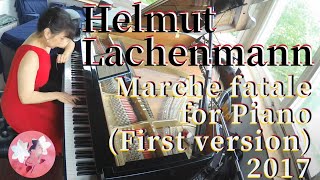
Marche fatale for Piano (First version) 2017 Helmut Lachenmann (*1935) ヘルムート・ラッヘンマン作曲 Marche fatale
Marche fatale for Piano (First version) 2017 Helmut Lachenmann (*1935) piano: Junko Yamamoto recording: Oliver Frick recording date: 12th June 2020 Music sheets:"Marche fatale for Piano" Breitkopf & Haertel EB9253 Marche fatale is an incautiously daring escapade that may annoy the fans of my compositions more than my earlier works, many of which have prevailed only after scandals at their world premieres. My Marche fatale has, though, little stylistically to do with my previous compositional path; it presents itself without restraint, if not as a regression, then still as a recourse to those empty phrases to which modern civilization still clings in its daily “utility” music, whereas music in the 20th and 21st centuries has long since advanced to new, unfamiliar soundscapes and expressive possibilities. The key term is “banality.” As creators we despise it, we try to avoid it – though we are not safe from the cheap banal even within new aesthetic achievements. Many composers have incidentally accepted the banal. Mozart wrote “Ein musikalischer Spaß” [A Musical Jape], a deliberately “amateurishly miscarried” sextet. Beethoven’s “Bagatellen” op. 119 were rejected by the publisher on the grounds that “few will believe that this minor work is by the famous Beethoven.” Mauricio Kagel wrote, tongue in cheek, so to speak, “Märsche, um den Sieg zu verfehlen” [Marches for being Unvictorious], Ligeti wrote “Hungarian Rock;” in his “Circus Polka” Stravinsky quoted and distorted the famous, all too popular Schubert military march, composed at the time for piano duet. I myself do not know, though, whether I ought to rank my Marche fatale alongside these examples: I accept the humor in daily life, the more so as this daily life for some of us is not otherwise to be borne. In music, I mistrust it, considering myself all the closer to the profounder idea of cheerfulness having little to do with humor. However: Isn’t a march with its compelling claim to a collectively martial or festive mood absurd, a priori? Is it even “music” at all? Can one march and at the same time listen? Eventually, I resolved to take the “absurd” seriously – perhaps bitterly seriously – as a debunking emblem of our civilization that is standing on the brink. The way – seemingly unstoppable – into the black hole of all debilitating demons: “that can become serene.” My old request of myself and my music-creating surroundings is to write a “non-music,” whence the familiar concept of music is repeatedly re-defined anew and differently, so that “derailed” here – perhaps? – in a treacherous way, the concert hall becomes the place of mind-opening adventures instead of a refuge in illusory security. How could that happen? The rest is – thinking. (Helmut Lachenmann, 2017)
Ennio Morricone: "Falls" from the movie "The Mission" (1986) エンニオ・モリコーネ作曲 「滝」映画 ミッション(1986)より
Ennio Morricone: "Falls" from the movie "The Mission" (1986) エンニオ・モリコーネ作曲 「滝」映画 ミッション(1986)より Piano: Junko Poppy Yamamoto [About PoppyJune] http://www.junkoyamamoto.de [Instagram] poppyjunepiano [Twitter] https://twitter.com/PoppyJunePiano
最新の動画
Trailer "Rhino 15.999"
cpc Junko Yamamoto: Sho, Performance, Video Oliver Sascha Frick: Elektronik, Klangregie Musik: John Cage „One9“ (1991) Björk „Antarctic Return“ (2005) Ken Ueno „How many more times will I see the full moon?“ (2023) Oliver Sascha Frick „Floating“ (2024) Junko Yamamoto „Rhino 15.999“ (2023) Video: Shinji Kawamura Deep Marine Scenes Junko Yamamoto Gefördert durch: Musikfonds, Stadt Stuttgart, Skam e.V., Gedok
2025/03/05•44 回再生•1 高評価
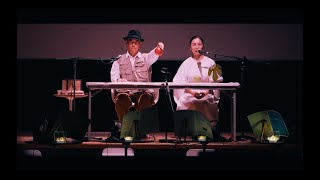
Tokyo Fluxus "fluxxxxxxus" 31st July 2024
Goethe Institut Tokyo
2025/03/05•46 回再生•1 高評価

Les couleurs des tons
2025/03/03•71 回再生•3 高評価
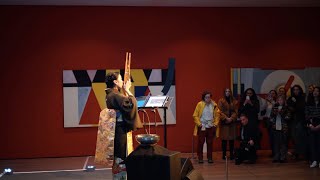
sounds of exciting sculptures
The ensemble "cpc" perform their own compositions which combines electronic and Shō to create. Recorded sounds created of sculptures by the artist Otto Herbert Hajek serve as sound material and are enhanced by the use of various instruments. Premiere: 16.3.2024 Kunstmuseum Stuttgart
2025/03/03•56 回再生•1 高評価

Shō and electronics
Shō: Junko Yamamoto music: Oliver Sascha Frick
2025/03/03•50 回再生•1 高評価
WortSCHATZ 2022
ShoShō Junko Yamamoto Ichizu Hashimoto Produktion 2022 Premiere 20.06.2022 Hospitalkirche Stuttgart Eine Selbstdarstellung für die Bewerbung für die Rechercheförderung TakeHeart
2025/03/03•44 回再生•0 高評価
stage zero
ShoShō Junko Yamamoto Ichizu Hashimoto Produktion 2019-2021 Premiere 25.09.2021 Württembergischer Kunstverein Stuttgart
2025/03/03•111 回再生•0 高評価
„Rhino 15.999“ (2023) Music and Video: Junko Yamamoto
„Rhino 15.999“ (2023) Music and Video: Junko Yamamoto Über das Rhinozeros: Nashörner zählen zu den letzten großen Pflanzenfressern, ihre Evolutionsgeschichte begann vor rund 50 Millionen Jahren. Die Tiere sind von großer Bedeutung für das Ökosystem, in dem sie leben: Sie prägen die Landschaft maßgeblich, indem sie Wasserlöcher und Savannenfächen offen halten. Das Breitmaulnashorn beispielsweise beißt das Gras teilweise so nah am Boden ab, dass dadurch Feuerschneisen entstehen. So schaffen die Nashörner sichere Orte für Arten, die einem Feuer nicht durch Weglaufen entkommen können, z. B. Schildkröten. Gefahr geht für die massigen Tiere vor allem vom Menschen aus. Historisch gesehen zählen die unkontrollierte Jagd und die Wilderei sowie der Lebensraumverlust zu den Hauptursachen des dramatischen Bestandsrückgangs. Und auch heute sind Wilderei und die hohe Nachfrage nach Nashorn-Horn grundsätzlich die größte Bedrohung für die Tiere. Insbesondere die beiden afrikanischen Arten sind von der massiven Wilderei betroffen. Mehr als 9.000 Tiere wurden in den vergangenen 10 Jahren gewildert. Und das hat verheerende Auswirkungen: Die Bestandszahlen des Südlichen Breitmaulnashorns fielen zwischen 2012 und 2021 von über 21.000 auf knapp 16.000 Tiere – und das, nachdem die Art erst zu Beginn des letzten Jahrhunderts knapp vor dem Aussterben gerettet werden konnte. 2022 vermeldete die Art das erste Mal seit zehn Jahren wieder einen leichten Aufwärtstrend mit 16.800 Individuen. Die Zahl der vom Aussterben bedrohten Spitzmaulnashörner wächst derzeit zwar noch, aber wesentlich langsamer als vor Beginn der Wildereiwelle. Von ihnen gibt es nur aktuell rund 6.500 Tiere – jedes verlorene Tier wiegt also schwer. (Quelle: WWF 20.6.2024)
2025/03/03•215 回再生•0 高評価

"Zen for Head 2024" Hommage á NAM JUNE PAIK performed by Junko Yamamoto
"Zen for Head 2024" Hommage á NAM JUNE PAIK (Composition 1960 #10" by La Monte Young) Junko Yamamoto performed "Zen for Head Hommage á Nam June Paik" at the Tokyo Fluxus at the Goethe-Institut Tokyo on July 31, 2024. She used gender as her theme, dipping her long hair, fig leaves, and scallop shells in blue calligraphy ink and draw line on 7 meters of calligraphy paper.
2025/03/03•375 回再生•4 高評価
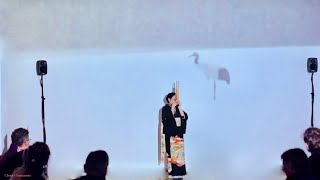
"Floating" for Shō and Electronics
Shō-Performer: Junko Yamamoto Music : Oliver Sascha Frick „Floating“ (2024) Video: Shinji Kawamura Recording of the premiere performance on November 10th 2024 Many thanks to Musikfonds, SKAM, Gedok Stuttgart for the sponsoring and support.
2024/12/05•51 回再生•2 高評価
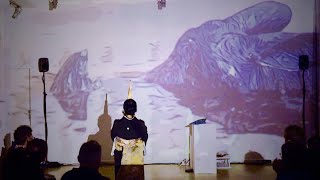
"Rhino15999" for Shō, Electronics and Video
"Rhino15999" for Shō, Electronics and Animationvideo Music and Animationvideo: Junko Yamamoto Recording of the premiere performance on November 10th 2024 Many thanks to Musikfonds, SKAM, Gedok Stuttgart for the sponsoring and support.
2024/12/05•42 回再生•0 高評価

Diana Rotaru – Velvet Alice (2021) for piano and electronics
Diana Rotaru – Velvet Alice (2021) for piano and electronics Perfomers: contemporary piano currents Piano: Junko Yamamoto Live-electronics, sound direction: Oliver Sascha Frick Recording date: October 2021 The title of the work alludes to its two starting points: Lewis Carroll’s „Alice in Wonderland” and the wonderland of visual artist Pipilotti Rist, especially her installation from 2009, „Yoghurt on Skin- Velvet on TV”. The piano functions as a toy / toy-piano / ticket to a magical, parallel universe hidden in the most prosaic things. The work is dedicated to the wonderful and magical “contemporary piano currents” – Junko Yamamoto and Oliver Sascha Frick. (Diana Rotaru) Diana Rotaru (b. 1981, Bucharest) has written from chamber and orchestral music to chamber opera, multimedia or dance shows and short film soundtracks. Her music explores different expressive directions, such as hypnagogia or pre-oneiric aesthetics, feminine psyche or imaginary folklore. She has also been active as a promoter of new music in Romania, being the artistic director of SonoMania new music ensemble (2012-2020) and the main coordinator of the Romanian Music Information Center (CIMRO). She is currently Artistic Director of MERIDIAN International Festival and President of ISCM Romania. Diana Rotaru is teaching composition and music analysis at the National University of Music in Bucharest, where she studied with Ştefan Niculescu and Dan Dediu (2000-2005) and she has a PhD in Composition. She also studied with Frédéric Durieux at the Conservatoire National Superieur de Musique et de Danse de Paris (2005-2006). She participated at different summer composition courses such as Acanthes (Metz, 2008), Voix Nouvelles-Royaumont (2002 and 2006), or the International Bartok Seminary (Szombathely, 2003), thus working with Jonathan Harvey, Savatore Sciarrino, Brian Ferneyhough or Michael Jarrell, among others. She has won numerous prizes, among which the Romanian Academy’s George Enescu Award (2010), the ISCM-IAMIC Young Composer Award (World Music Days, Vilnius, 2008), the Irino Prize (Japan, 2004) or the George Enescu Prize ex-aequo (Romania, 2003 and 2005). Her works have been commissioned by Ensemble XXI (Dijon), Stockholm Saxophone Quartet, Pärlor för svin, Ernst von Siemens Foundation, Takefu International Music Festival, etc. [dianarotaru.net]
2022/03/12•509 回再生•18 高評価
このチャンネルに声を届ける
あなたの一言がクリエイターに届きます(匿名・任意)
本人の方へ
このページを受け取ると、情報を直したり、声に返信できます
雰囲気が近いYouTuber


クリチバの仲間
クリチバのページへ
このチャンネルをサイトに貼る
ブログや自分のサイトに貼れる紹介カードです。下のコードをそのままコピーしてお使いください。