オーストリア
オーストリア在住日本人YouTuber5組の実像—ザルツブルクとウィーンから読む現地発チャンネルの実力2026
オーストリア在住日本人YouTuberを5組紹介。登録者数は3520前後〜1300台、動画数は97〜932、拠点はザルツブルクとウィーン。各チャンネルの特性を、提供データの事実に基づき、編集部の評価軸で解説する。
2026/08/31

3,630
登録者数
980
動画数
 登録者数・動画数などのデータは YouTube から取得しています。当サイトが独自に作成した解説・コメントは YouTube が提供する情報ではありません。
オーストリア・ザルツブルクを拠点にする編集部視点では、地域性と専門性の両立がこのチャンネルの最大の強みとなる可能性を感じます。現状登録者数・動画数はゼロですが、地域密着の発信を積み重ねることで、海外の旅好き・在住者・現地学生といった層にリーチできる前提です。特に「ザルツブルク」という世界的な観光地の裏側や生活のリアルを掘り下げると、更新頻度とコミュニティ性が高まるほど定着性が生まれます。専門性としては、地元のイベント解説、街歩きガイド、住民インタビューなどが有効です。今後は定期的な動画公開と地域情報の深掘りを軸に成長が期待できます。

This performance took place at Ehrbar Saal in December 2025 as part of the Festival Dritte Wiener Ernsthaftigkeit, featuring live painting alongside the music. The full performance—re-uploaded in higher quality—will be available on my YouTube channel in January. A low B resonates in the bass🔔 silence sharpened. Then a cascade of thirty-second notes marked laissez vibrer: let the sound ring. Musica Nara opens like a temple bell, its resonance lingering in the air. The composer Minako Tokuyama describes the piece as being guided by a butterfly drifting in from ancient times, revealing fleeting images of old Nara 🦋 Figures such as Guardian Deities of the Children, Running Priest, Laughing Buddha, and Deva King appear within the score. Jizō, monks, Buddhas, and fierce guardians come vividly to life, reflecting both the rich diversity of historic Nara and its dignified stillness. As the music unfolds, the tempo accelerates into insistent staccato figures before the bell returns once more. The final resonance recalls dusk in the ancient capital. “Within the decay of the last sound,” the composer writes, “listen for echoes of Nara from more than 1,250 years ago.“ 低音に響くB音。静寂を際立たせる鐘の一打。 続く32分音符には laissez vibrer ― 響きをそのままに。 《ムジカ・ナラ》の冒頭は、寺の鐘とその余韻から始まります。 作曲者はこの作品を、「いにしえから舞い込んだ蝶に導かれ、奈良の昔の姿が映し出される音楽」と語っています 🦋 楽譜には Guardian Deities of the Children Running Priest Laughing Buddha Deva King といった言葉が並び、地蔵や僧侶、仏像、仁王たちが生き生きと現れます。 歴史ある奈良の多様性と、どこか凛とした空気。 テンポは次第に加速し、再び鐘が鳴り、曲は黄昏の古都へと還っていく。 「最後の音の余韻の中に、1250年以上前の奈良の響きを聴いてほしい」——作曲者の言葉です。


2026/10/18•924 回再生•14 高評価
I suspect Roland Barthes might have a few objections to my Beethoven Op. 111 🎹 Perhaps I am too invested in the phenotext, too eager to express, to communicate, to make Beethoven say something. In The Grain of the Voice, Barthes reflects on how technical perfection and interpretative mastery can sometimes leave us longing for something else. The genotext, the bodily, material presence of sound itself, beyond the meanings we try to convey. So perhaps I should stop trying to express so much? But does knowing this make me any less determined to express? Not at all. After all, isn’t the desire to express something also part of being human….? I’d be very eager to know your idea about expression and interpretation! #Beethoven #Op111 #RolandBarthes #Phenotext #Genotext
2026/10/16•281 回再生•26 高評価
2026/09/27•971 回再生•43 高評価
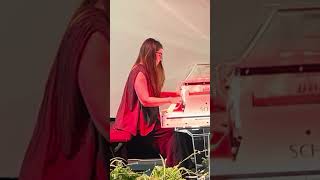
2026/09/22•792 回再生•31 高評価
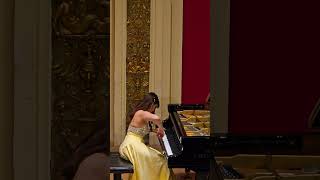
2026/09/21•1,304 回再生•38 高評価
2026/09/20•70 回再生•13 高評価
2026/09/20•72 回再生•10 高評価
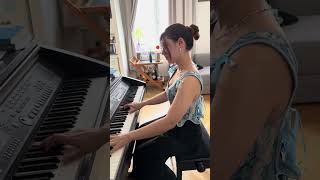
2026/09/20•290 回再生•23 高評価
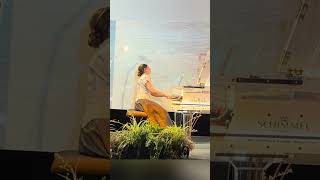
【Programm Note 🎶 Part 2】 see German version in the comment below!⬇️ From Nara, the programme travels to Pörtschach, on the shores of the Wörthersee. There is something unusual about performing Brahms’s Two Rhapsodies, Op. 79 here, because Brahms composed these works during his summer stay in Pörtschach in 1879. The landscape that surrounds us today was therefore already present when these sounds first came into being: the lake, the mountains, the changing light, the silence between sounds. Brahms’s two Rhapsodies inhabit a strange space between freedom and structure. Their title suggests improvisation, spontaneity and the freedom of a musical outpouring, yet beneath their passionate surface lies an extraordinary architectural discipline. They seem to speak from somewhere between memory and immediate experience: music that is at once deeply personal and carefully contained. But a place does not preserve only what happened in it. It also accumulates stories. One of the most haunting stories connected with the Wörthersee is that of Ottilie von Herbert, who disappeared on the lake in 1847. Whether her death was an accident, a tragedy or something else has never been established with certainty. What remains is the song she left behind, and the legend that grew around her. I find it moving that the same landscape can hold such different layers of musical and human memory. Alongside this history, I would like to bring into perspective a song that inspired Brahms that belongs to the living memory of this region: the Carinthian folk song I tua wohl. Its title may be translated as “I wish you well” or “I bid you farewell.” The song carries in its simple melodic language, affection and loss exist together. This makes it especially meaningful here. Like the Wörthersee itself, I tua wohl holds more than one kind of memory: personal and communal, spoken and unspoken, rooted in a particular landscape yet open to anyone who has ever had to say goodbye.
2026/09/12•1,353 回再生•52 高評価
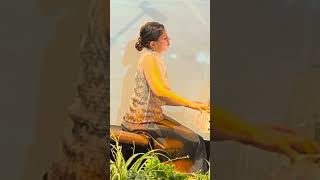
This costume is especially meaningful to me: a jacket made from an obi, the traditional belt worn with a kimono. And it’s a gift from @yuri_sakura_1228 先生 who tought me rhythmic from the age of 1 🚼 The obi does more than hold the kimono together. Worn around the body, it creates a physical awareness of the tanden, the centre of the body, and gives a sense of being held and supported. This connects deeply with my ongoing research into Datsuryoku 脱力 the practice of releasing unnecessary tension and finding a state of effortless presence. Interestingly, on the day of this concert, during rehearsal, Professor Kropfitsch @johanneskropfitsch gave me the feedback to “lower my centre.” It was incredibly helpful, and it made me think about something I had discovered through practising with an obi. I noticed obi did not simply help me place my centre. It allowed me to relax into a composed posture. Without it, I might achieve the same position by actively holding myself there 🥶keeping my body together through muscular effort. With the obi, however, I could experience the posture differently: relaxing into a composed posture. For me, this is one of the most fascinating aspects of Datsuryoku: not simply learning how to hold the body correctly, but discovering how to let the body arrive there through release. This is something I would love to continue exploring!! how an external physical sensation can help us access an internal state of freedom and composure.
2026/09/12•280 回再生•11 高評価
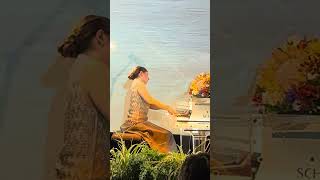
2026/09/11•609 回再生•14 高評価
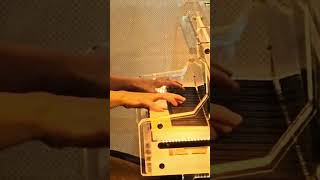
„Wo der Klang sich erinnert“ This was the theme of this concert in my mind🫀 I’d like to share a bit from what I wrote for this concert‘s Programm Note 📑 ✍️ at the end stands Beethoven’s final piano sonata, Op. 111. I hear a profound relationship between Brahms’s Rhapsodies and Beethoven’s last sonata. Both begin from an intensely human world of conflict, passion and physical energy. But where Brahms seems to hold this energy within ever more intricate structures, Beethoven ultimately asks what lies beyond it. The first movement of Op. 111 confronts conflict directly. The second does almost the opposite. Through variation, repetition and transformation, music gradually seems to loosen its attachment to ordinary time. What begins as a theme becomes increasingly weightless; rhythm becomes suspended; sound becomes resonance. In this sense, Op. 111 does not simply conclude the programme. It changes the meaning of what came before it. Musica NARA asks us to listen to memory. The Rhapsodies ask us to enter experience, offers a voice of tenderness and farewell. Ustvolskaya confronts us with the physical reality of sound. Debussy allows sound to become an imagined world. And Beethoven finally asks whether music can exist beyond all of these things. Perhaps this is what connects these works across almost two centuries: they all ask what can remain when the original moment has disappeared. The composer is gone. The place has changed. The body that first played the music is gone. The listener will eventually leave. And yet a sound can remain, for a few seconds in the air, or for centuries in memory. It was a great privilege to play this music here, in Pörtschach, where Brahms himself once listened, worked and composed. I am deeply grateful to share this evening with you, and especially grateful to be able to return these sounds to the landscape that first received them. @visitpoertschach @johanneskropfitsch ❤️🔥
2026/09/11•188 回再生•14 高評価
あなたの一言がクリエイターに届きます(匿名・任意)
本人の方へ
このページを受け取ると、情報を直したり、声に返信できます
ブログや自分のサイトに貼れる紹介カードです。下のコードをそのままコピーしてお使いください。